



About Center for Embedded Systems and IoT.
Centre for Embedded Systems & Internet of Things (IoT) is established to provide students with practical knowledge, technical expertise, and industry-oriented skills in embedded systems, microcontrollers, communication protocols, sensor interfacing, and IoT-based applications.
The Centre serves as a platform for bridging the gap between theoretical knowledge and real-world industrial applications through hands-on training, project-based learning, research, innovation, and industry collaboration.
Students receive practical exposure to various Embedded Development Platforms, including ARM Cortex-based boards, STM32 Development Boards, Raspberry Pi, 8051 Microcontroller Boards, Texas Instruments Boards and Node MCU boards.
The Centre encourages students to participate in national-level technical competitions, hackathons, design challenges, internships, and industry-oriented projects, thereby enhancing their technical competencies and employability in core electronics and embedded systems industries.
Faculty Team – Embedded Systems & IoT Special Lab
Lab Coordinator
Dr. R. Anirudh Reddy
Lab Faculty Members
1. Dr. T. Vasudeva Reddy
2. Mrs. K. Sai Prasanna
3. Mr. D. Srikar
4. Mr. M. S. S. Bhargav
5. Dr. Y. Sangeetha
6. Mrs Ch.Sravanthi
Objectives:-
- Hands-on Technical Training: Provide practical exposure to microcontrollers, embedded processors, sensors, actuators, and IoT development platforms.
- Industry-Oriented Skill Development: Train students in Embedded C, Python, Linux, RTOS, hardware interfacing, and communication protocols such as UART, I²C, SPI, CAN, and LIN.
- Project-Based Learning: Encourage students to develop real-time embedded and IoT applications addressing industrial and societal challenges.
- Research and Innovation: Promote product development, prototype design, interdisciplinary research, and innovative embedded solutions.
- Competitive Excellence: Motivate students to participate in national-level hackathons, technical competitions, and engineering design contests.
- Industry Readiness: Prepare students for internships, placements, and careers in core electronics, automotive electronics, semiconductor, IoT, and embedded systems industries.
- Industry–Academia Collaboration: Strengthen interaction with industries through technical workshops, internships, expert lectures, and collaborative projects.
This proposed Programme develops students from C programming and basic hardware interfacing to ARM firmware, real time operating systems, Embedded Linux, and connected product development. It builds on the supplied ES & IOT syllabus and adds the programming depth, debugging practice, testing, and project evidence needed to apply for core embedded internships and entry level roles.
II Year is treated as a full year across II-I and II-II. The hours below are proposed special lab contact hours, separate from the regular academic curriculum, and may be aligned with the institutional calendar.
Stage | Course focus | Hours |
II Year | C Programming and Embedded Hardware Foundations | 48 |
III-I | ARM Cortex-M Firmware Development | 36 |
III-II | Embedded Real Time Operating System | 36 |
Total | Progressive practical training | 120
|
II Year Course Plan – C & Basic Embedded Systems
Objective: Establish C Proficiency, Electrical & Electronics fundamentals, and Independent hardware interfacing skills.
SL No. | Module and essential topics | Practical evidence |
1
| Embedded systems and electronics: MCU versus MPU; | Identify board components; measure supply levels; |
2 | C fundamentals: types; operators; increment and | Number conversion, bit counting, and menu driven |
3 | Functions and data: scope; arrays; strings; structures; | Process sensor records and organise a multi-file |
4 | Pointers and memory: addresses; dereferencing; | Trace buffer operations and correct invalid memory |
5 | Initial MCU programming: Arduino setup; GPIO; | Button controlled outputs and timed LED patterns |
6 | Analog inputs and displays: ADC resolution; scaling; | Display sensor values with units and compare against |
7 | Microcontrollers: Specification; Data Sheet; GPIO Programming; Keil IDE | Understanding the data sheet; Embedded-c Programming |
8 | Timers, interrupts, and PWM: periodic sampling; ISR | Timer based sampling, event counting, and brightness |
9 | UART, I2C, and SPI: wiring; addressing; timing; | UART command interface, I2C sensor or EEPROM, and |
10 | Introduction to IoT: Architecture; Clouds; IoT Use cases | IoT Use cases |
11 | Individual mini project: requirements; block | Complete demonstration and individual code |
III-I Course Plan – ARM Programming
Objective: develop structured firmware on one STM32 Cortex-M platform. Implement selected peripherals at register level, then use HAL where it supports system integration.
SL No. |
Module and essential topics |
Practical evidence |
1 |
ARM |
Port LED |
2 |
GPIO |
Reusable |
3 |
Timers |
Measured |
4 |
ADC : |
Multichannel |
5 |
Communication |
UART |
6 |
Hardware |
Project |
7 |
Integrated |
Multitasking |
III-II Course Plan – Embedded RTOS & Linux
Objective: Learn RTOS, Integrate embedded software, Linux, and communication into a prototype with measurable acceptance criteria
Sl No. | Module and essential topics | Practical evidence |
1 | RTOS: Task States; Priorities; Scheduling; Blocking; Timing; Stack Sizing. | Periodic Sensing, Display, And Communication Tasks. |
2 | Synchronization: Queues; Mutexes; Semaphores; Notifications; Races; Deadlock; ISR-Safe Apis. | Transfer Data Between Tasks And Protect A Shared Peripheral. |
3 | System Programming: Files; System Calls; Processes; Threads; Pipes; Mutexes; Producer–Consumer Model. | Threaded Data Processing Or Logging Application. |
4 | Linux Development: File system; Permissions; Shell; SSH; GCC; Make; GDB. | Compile And Debug A Multi-File C Application. |
5 | Raspberry Pi: GPIO; UART; I2C; SPI; Permissions; User-Space Peripheral Access. | Sensor Acquisition And STM32 Communication. |
6 | Driver Foundations: User And Kernel Space; Modules; Device Files; Character Drivers; Device Tree Introduction. | Build And Load A Simple Module On A Controlled Lab Image; Explain The Access Path. |
7 | Capstone: Requirements; Architecture; Firmware; Linux Application; Integration And Testing. | Working Prototype With Measured Acceptance Criteria. |
8 | Technical Review: Live Coding; Debugging; Presentation; Resume And Repository Review. | Individual Practical Examination And Project Defense. |
Assessment and Internship Readiness
Assessment component | Weight |
Individual C and Embedded C programming | 30% |
Individual hardware and debugging practical’s | 30% |
Project implementation and verification | 30% |
Documentation and individual viva | 10% |
Require an individual pass in programming and debugging, including when project work is completed in teams. Assess functional correctness, understanding, fault diagnosis and code quality.
Required student portfolio
· C Repository: Pointers, Structures, Bit Manipulation, Buffers, And Modular Programming.
· MCU Project: Timers, Interrupts, Communication, And Measured Tests.
· RTOS: Concurrency, Synchronization, And Error Handling.
· Capstone: Requirements, Architecture, Schematic, Source, Build Instructions, Test Evidence and a Demonstration Video.
Implementation priorities
Strengthen C before board libraries; teach datasheet reading and debugging throughout; introduce Linux system programming before drivers; assess projects against explicit requirements. Keep AI, OS and Programming Subjects as electives so the core sequence remains achievable.
Programme outcomes
- Write Modular C Code Using Pointers, Structures, Buffers, And Bit Manipulation.
- Read Datasheets and Configure Microcontroller Peripherals.
- Debug Hardware and Firmware with Appropriate Instruments and Debugger Tools.
- Build Interrupt Driven and RTOS Based Applications with Error Handling.
- Integrate Linux, Sensors, And Networking into a Tested Prototype.
- Explain Design Decisions and Present Documented Project Evidence.
List of MoUs and Key Activities
S. No. | Organization / Institution | Key Areas of Collaboration |
1 | Pi Square Technologies & QNX – QNX Everywhere Program | Training for students and faculty on QNX Real-Time Operating System (RTOS), industry-oriented internships, placement opportunities, technical hackathons, and hands-on skill development. |
2 | Tropoleap India Private Limited | Student internships and placement opportunities, faculty research consultancy, collaborative industry projects, and practical exposure to emerging technologies. |
3 | International Institute of Information Technology, Hyderabad (IIIT-H) | Specialized student training in Internet of Things (IoT) and Robotics, internship and MS opportunities, joint research activities, and collaborative publications involving students and faculty of BVRIT and IIIT-H. |
4 | HCL Tech | Industry-oriented training in Embedded Systems and Internet of Things (IoT), technical skill enhancement, hands-on learning, and student internship opportunities. |
Objectives of the Collaborations
- Strengthen industry–academia interaction through technical training and knowledge exchange.
- Enhance students’ employability through internships, industry exposure, and placement opportunities.
- Promote faculty research consultancy, joint research projects, and collaborative publications.
- Encourage student participation in hackathons, innovation challenges, and emerging technology programs.
- Develop industry-ready skills in Embedded Systems, IoT, Robotics, and Real-Time Operating Systems.
Hardware and Software Facilities Available
The Centre for Embedded Systems & IoT is equipped with a range of hardware development platforms and software Integrated Development Environments (IDEs) to provide students with hands-on experience in Embedded Systems, Internet of Things (IoT), Microcontroller Programming, Real-Time Operating Systems (RTOS), and Hardware–Software Integration.
Hardware Development Platforms
S. No. | Hardware / Development Board | Applications |
1 | ARM Cortex-M3 Development Boards | ARM architecture, Embedded C programming, GPIO interfacing, timers, interrupts, and peripheral interfacing. |
2 | Raspberry Pi Boards | Embedded Linux, Python programming, IoT applications, sensor interfacing, and edge computing. |
3 | IoT Experimental Kits | Sensor integration, wireless communication, cloud connectivity, real-time monitoring, and IoT-based applications. |
4 | STM32 Development Boards | ARM Cortex-M programming, embedded system design, UART, SPI, I2C, ADC, PWM, and real-time applications. |
5 | Node MCU Development Boards | Wi-Fi-based IoT applications, sensor interfacing, MQTT communication, cloud integration, and wireless automation. |
Software Tools and Integrated Development Environments (IDEs)
S. No. | Software / IDE | Applications |
1 | Keil µVision IDE | ARM microcontroller programming, Embedded C development, simulation, and debugging. |
2 | QNX Momentics IDE | QNX RTOS application development, real-time programming, debugging, and embedded software development. |
3 | STM32CubeIDE | STM32 microcontroller programming, peripheral configuration, code development, and debugging. |
4 | Python IDE | Python programming, Raspberry Pi development, sensor data processing, automation, and IoT applications. |
5 | Arduino IDE | Programming NodeMCU, ESP32, and compatible microcontroller boards for sensor interfacing and IoT prototyping. |
Key Learning Outcomes
- Hands-on experience with ARM, STM32, Raspberry Pi, and IoT development platforms.
- Practical knowledge of Embedded C, Python, and microcontroller programming.
- Development of real-time embedded applications using QNX RTOS.
- Implementation of sensor-based IoT applications and wireless communication systems.
- Enhancement of industry-relevant technical skills through hardware–software integration and project-based learning.
Major Project (IV year Students):
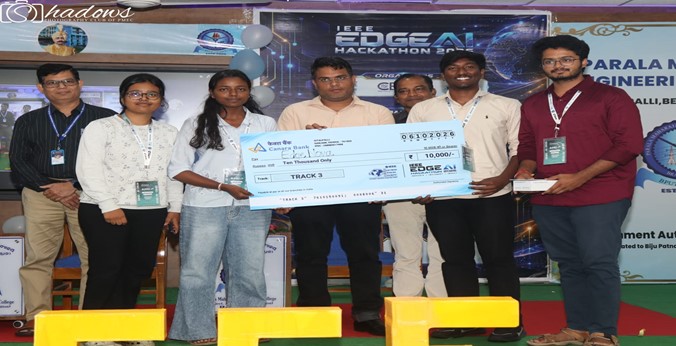
IEEE Edge AI Hackathon 2026
IIIrd Year ECE Students S.Bhavani, Govardhan, V.Bhavani Reddy and B.Shiva Prasad won first prize in the IEEE Edge AI Hackathon 2026 with cash prize of 10,000/- under the guidance of Dr.R Anirudh Reddy
cluster level QnX E-Hack
IIIrd Year students T.Ishika Singh, V satya Siddahratha and Shaik sohail has won the cluster level QnX E-Hack with a cash prize of 10,000/- under the guidance of Mrs.K Sai Prasanna & Dr. R Anirudh Reddy
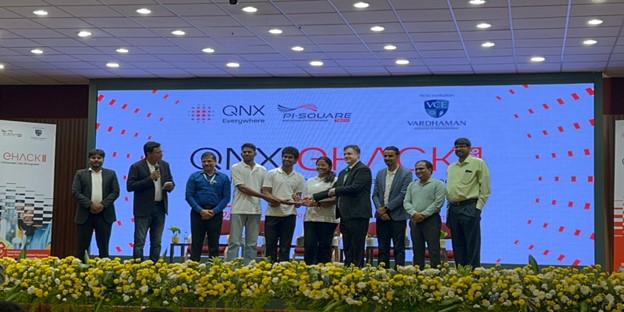
IIIrd Year students Rizpah,K.Asish and K.Harshavardhan Reddy are the runnerup of the cluster level QnX E-Hack with a cash prize of 5,000/- under the guidance of Dr. R Anirudh Reddy & Mrs.K Sai Prasanna
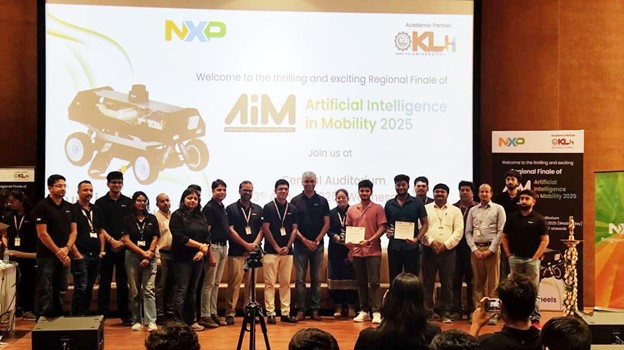
NXP AIM challenge – 2025
IIIrd Year students KVN Siddharth and Vishnu varshith are the finalist of the NXP AIM challenge – 2025 under the guidance of Dr. R Anirudh Reddy
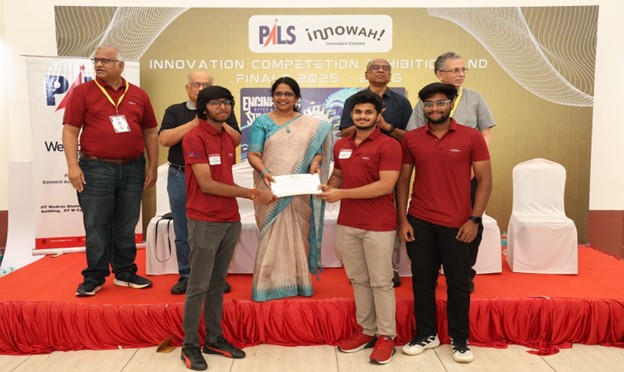
Finalist of the PALS Innowah– 2025
IIIrd Year students KVN Siddharth, J Mahesh and Vishnu varshith are the finalist of the PALS Innowah– 2025 under the guidance of Dr. R Anirudh Reddy
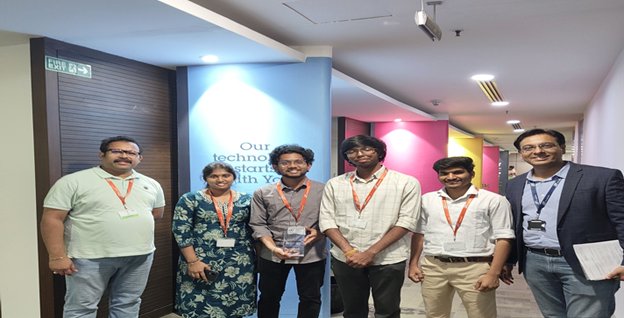
ST Innovation Fair 2026
IIIrd Year Students K Geetha Gowthami , J Sri Sai Mahesh, Kadagoni Vamshi won third prize in ST Innovation Fair 2026, held at ST Microelectonics office,Greater Noida under the guidance Mr.MSS Bhargav
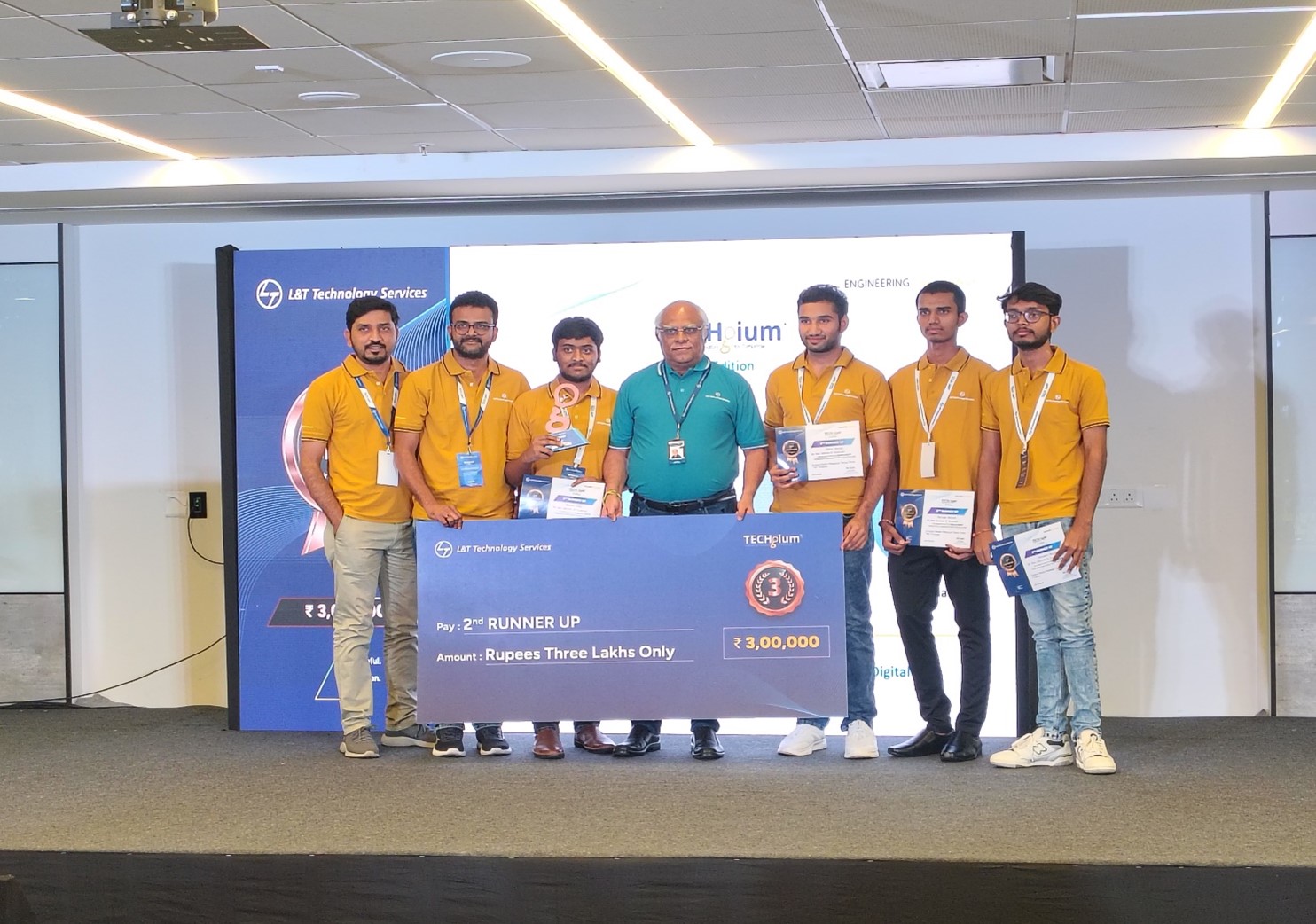
L&T TechGium Contest-2025
IIIrd Year students Vamshi Krishna, Vishnu, Yeshwanth and Abhilash are the winners of the L7T TechGium Contest-2025 with a cash prize of 3,00,000/- under the guidance of Dr. R Anirudh Reddy